Persuade without tricking: from models to copy with the marketing-psychology skill
In part 1 of the guide you installed the skill and learned the eight models that explain how your buyer decides. This part is the step most people skip: turning those models into concrete paragraphs. We will see the five persuasion models shipped with marketing-psychology (authority, commitment, unity, scarcity, framing) applied to real text from this blog, with the before and after.
The goal is for your agent, with the skill loaded, to rewrite any block of yours and move a metric without the reader feeling manipulated. If the new version makes you uncomfortable, it probably crossed the ethical line: the skill warns that drawing that line is your job, not its.
Authority: cite sources, not adjectives
The skill defines authority as "the deference we show toward experts and credentialed figures". For your agent that becomes a practical rule: never write "the best skill" or "the most popular project". Replace it with a verifiable number, a quote from a recognizable name or a link to source code.
Before (weak version of the Caveman post):
Caveman is one of the best skills to save tokens in Claude Code.
After (published version):
Caveman is cited by Adobe Research, A/B tested by JetBrains and measures 35 % fewer output tokens with /ultracave.20 words and one mental shift: you go from "trust me" to "trust Adobe and JetBrains". Tell your agent to replace every adjective with a datum or delete it. In the repo this behavior lives in .claude/product-marketing.md: "verifiable, with tested commands and exact versions".
Commitment and consistency: ask for something small first
People who take a small step become more likely to take the next one. Robert Cialdini measured this long before it reached marketing books.
A clear example on the blog: in actionable posts we first give you the New project prompt, which needs no commitment (copy, paste, 30 seconds). Once that works, the Advanced project prompt asks you to touch your real repo. The ladder is designed that way because a reader who already copied something small and had it work arrives at the big step inclined to say "yes".
Tell your agent this rule:
When proposing a next step to the reader, start with the smallest possible ask:
copy a command, download a .md, subscribe to the newsletter.
The big step (buy, install, migrate) only comes once the small one works.
Unity: talk like a tribe, not like a brand
Stronger than "similar to you" is "one of us". The SKILL.md calls this the unity principle. In codigoagente the tribe is "developers and small-business owners in LatAm and Spain who run AI agents in production". That is why .claude/product-marketing.md mandates tuteo in Spanish, euros when we address Spain, USD in global examples, and absolutely no corporate-magazine voice.
A rewrite the skill proposed for the concat post changed one sentence for another:
- Before: "Users of Claude Code who want to optimize their workflow should consider..."
- After: "If you use Claude Code every day like we do, this saves you half the copy-paste."
The difference is visible at a glance. If your agent writes "users should", cut it: it is not from the tribe.
Scarcity: only when it is real
Scarcity works. It is also the most abused model: countdowns that reset, "only 2 seats left" that have been there for a month, "last 24 hours" offers that repeat every week. The skill warns: "only use when genuine". The practical rule for your agent:
Do not use scarcity unless you can point to the exact number and the source.
"3 seats left in the workshop" if you have a real cap. Never "limited slots".
Forbidden: made-up temporal urgency (countdowns, "today only") not tied to a public fixed date.
A case you see often with digital products: a "launch price" that is supposed to rise in 7 days and is still there a month later. Google and returning buyers notice, and the next time you set a real date nobody will believe you. Fake scarcity charges interest.
A frequent ethical use is technical scarcity: if the project repo is early release or beta, say so. It is real information that shapes the reader's decision.
Framing: same truth, two effects
Framing changes the wrapping, not the facts. It is probably the model with the best ROI per edited line, and the one unsupervised agents get most excited about.
Three pairs from the SKILL.md:
| Original phrasing | Same datum, different frame |
|---|---|
| "10 % error rate" | "90 % success rate" |
| "Your agent takes 8 hours to finish the project" | "Your agent works while you sleep and hands it over in the morning" |
| "The Max plan costs 200 USD/month" | "The Max plan costs less than one senior dev afternoon" |
Ethical rule: framing cannot change the fact. If your agent writes "average savings 35 %" when the truth is "best measured case was 35 % in one scenario", that is not framing: it is a lie. In the Caveman post we policed this on purpose because the repo has a table with three different metrics and any rushed agent will mix them up.
Pratfall effect: admit one small weakness
A perfect expert is less credible than an expert who admits a flaw. If your agent sells your tool as "no downsides", the reader smells a salesman. If it admits a concrete limit, the reader lowers the guard.
Real example: every blog post about a skill with an operational cost says so. The slopus post opens with "GPL-3.0 for the code, CC BY-NC for the weights: you cannot use it in a commercial SaaS". The fish-speech post says "Supertonic 3 sounds better but needs 6 GB of VRAM if you want it fast". That admission converts: the reader who stays, stays with trust.
Tell your agent:
Before closing an article, include a "What not to expect from this" section:
a real limitation of the project or skill, with the exact technical detail.
Do not invent flaws. If you cannot find one, re-read the docs until you do.
The ethical test
When you doubt whether a change your agent proposes is persuasion or manipulation, run it through three questions:
- Could I defend it to the reader's face? If not, delete it.
- Is the claim verifiable? If not, replace it with one that is.
- Am I removing value from the reader or saving them time? If you remove value (making them miss an informed decision, pushing them to the wrong plan), delete it.
All three live in the SKILL.md as "ethical application" in various models. Add them to .claude/product-marketing.md as a general rule and your agent will stop proposing dark patterns that come back as churn or refunds.
FAQ
Can I combine several models in one block? Yes, that is standard. The repo card at the end of every post uses authority (stars and license), social proof (install counter) and peak-end (closes the article with an action). Three models in 150 pixels.
What if I have a product I am not quite proud of? More common than it sounds. If your agent is pushing the ethical line in copy, the real problem is usually in the product. Fix that first.
And classic storytelling? It fits here as a technique inside framing + mere exposure. In reverse-engineer-marketing we analyze winning landing pages and almost all of them use a short customer story as an anchor.
What is next
In part 3: pricing and choice architecture we cover anchoring, decoys, bundles and how to design the page where the reader finally pays. If you have not installed the skill yet, go back to part 1 and copy the "New project" prompt.
// source code
Help us grow
codigoagente is free, with no paywalls. If this article helped you, any of these keeps the blog going.
- Share it with someone who'll find it usefulWhatsAppLinkedInXFacebook
- Meet our sponsorSafe Build Labs
More on AI agents
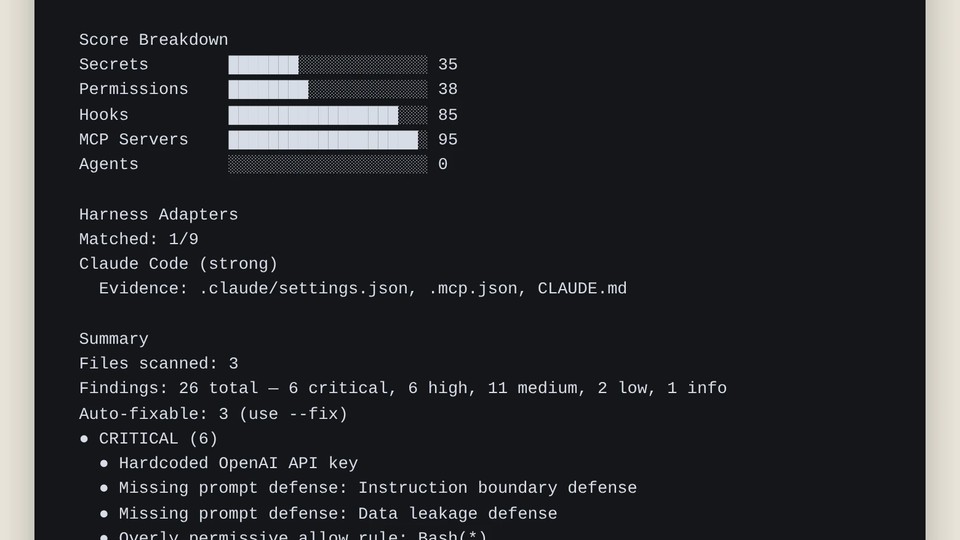
guide · The complete ECC guide for Claude Code · #8
- Security and code review
- Claude Code
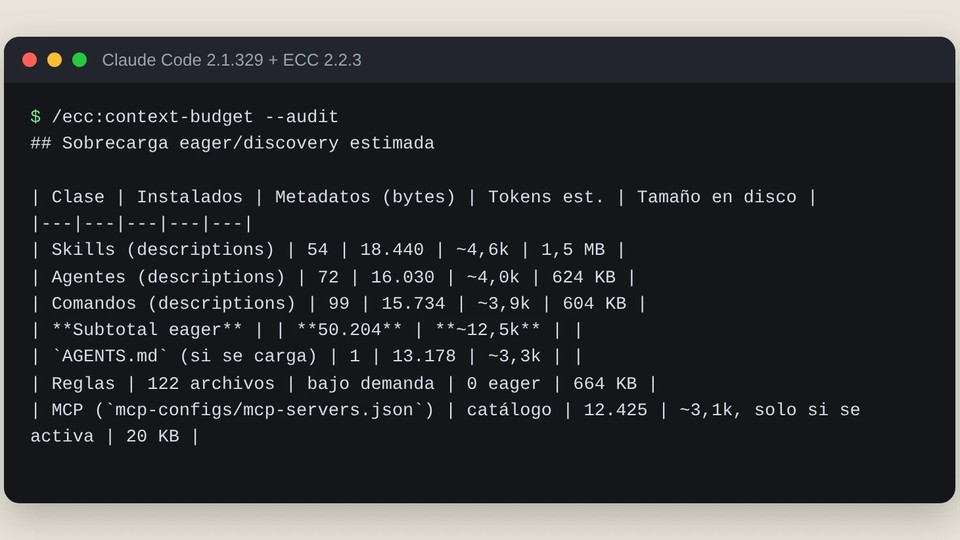
guide · The complete ECC guide for Claude Code · #7
- Claude Code
- Skills for your agents
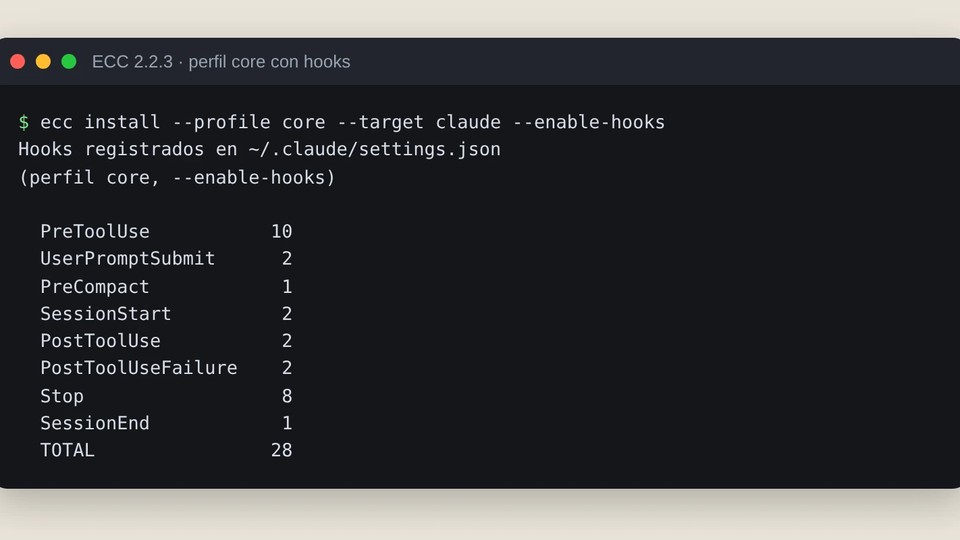
guide · The complete ECC guide for Claude Code · #6
- Claude Code
- Skills for your agents